watsonx.BI
I led the end-to-end design strategy for IBM’s Watsonx BI. My role spanned vision-setting, product alignment, and execution, ensuring that design not only elevated the user experience but also directly advanced business objectives.
Company
IBM
Role
Design Leadership and Project Management
Team Size
10+ Designers and Researchers
Artificial Intelligence Experience Design
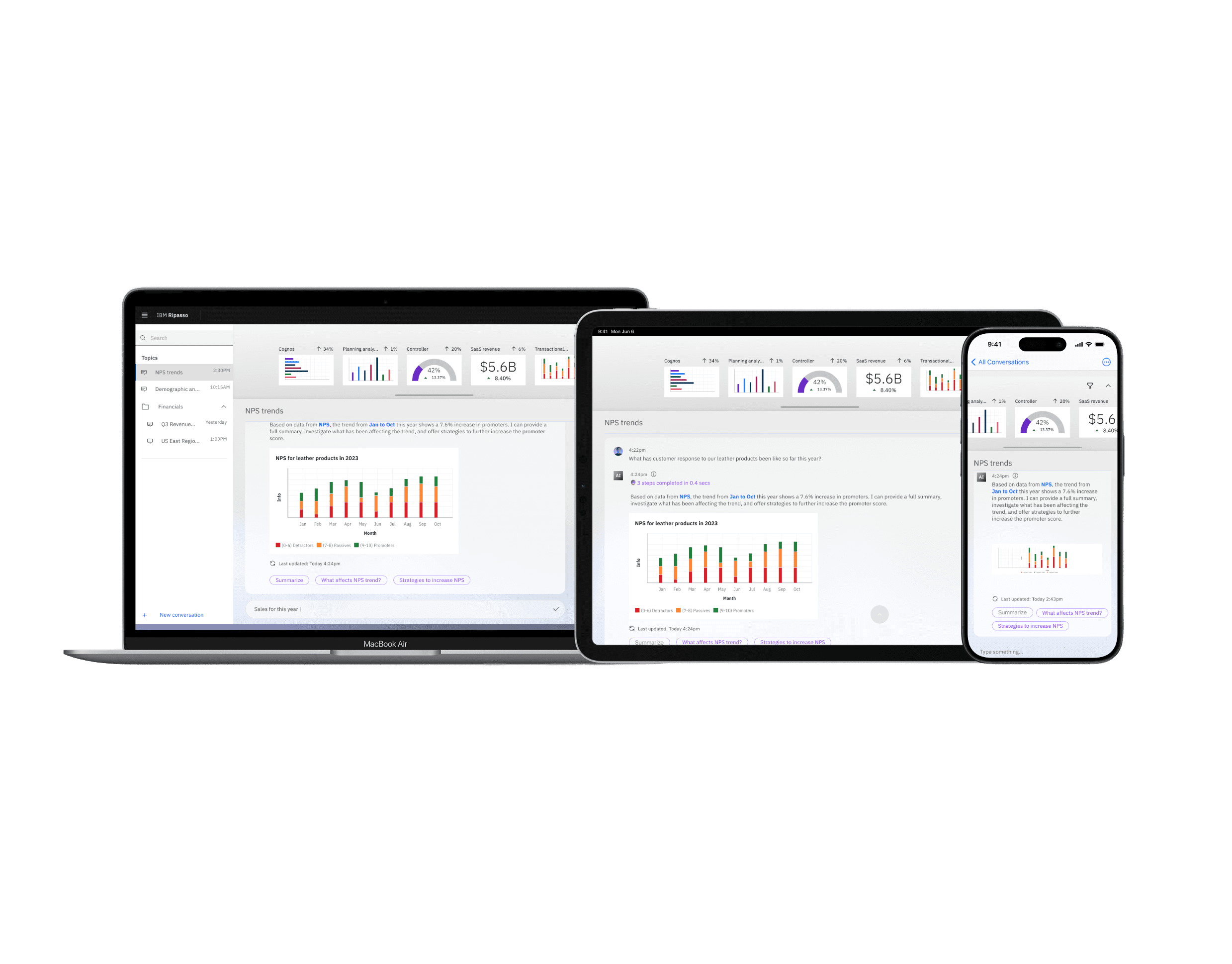
Context: Enable business users to leverage Conversational AI to gain deeper insights into company data, automate processes and collaborate with other agents across their organization
I guided a cross-disciplinary team of designers and researchers, shaping design quality standards, critiquing work, and establishing systems that scaled across multiple release cycles. Mentorship was a core part of my leadership philosophy, supporting the growth of over a dozen designers and successfully advocating promotions for multiple team members.
My work centered on building strong partnerships across product, engineering, and research. I created alignment around user needs and business priorities, enabling faster and more confident decision-making. I collaborated closely with executive leadership to communicate design direction, highlight risks, and negotiate scope to ensure that design remained a strategic asset rather than a downstream activity.
By coordinating with development and program management teams, I helped shape release plans, clear delivery obstacles, and position our product vision for continued growth in a competitive analytics landscape.
Outcome 01:
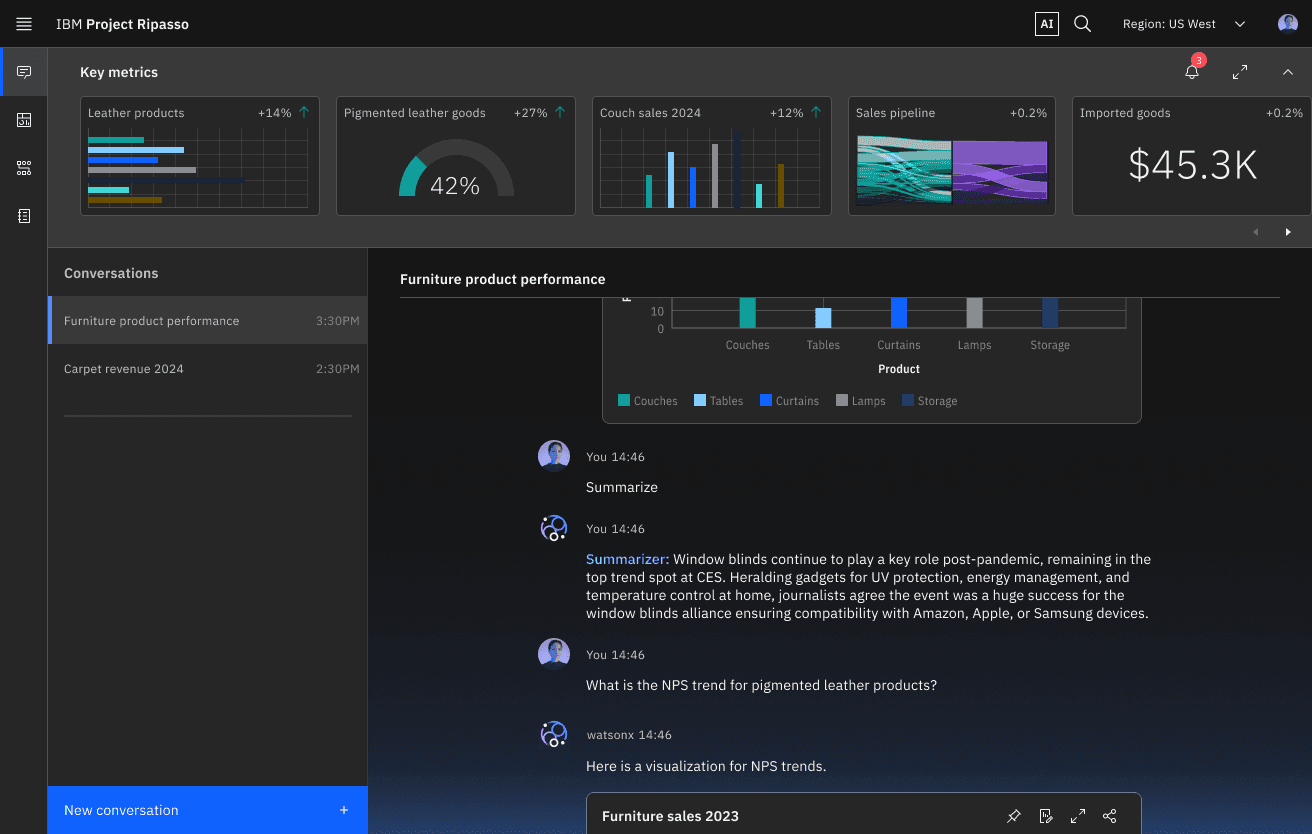
Conversational AI — Combine LLMs with Business Semantics to increase syntax recognition and to understand meaning with 90% accuracy
I challenged the team to think beyond building yet another chatbot and instead create an AI assistant that truly understands business context. Our goal was to make responses more financially aware, being able to interpret company data, grasp user intent, and provide meaningful, accurate insights rather than generic answers. Initially, our response generation accuracy was at 60% but our team had a goal of achieving much higher accuracy.
To get there, I led a series of design and strategy workshops that aligned product, research, and engineering on a new approach: combining LLM capabilities with business semantics. This enabled the system to recognize syntax, understand contextual meaning, and reason over financial data with far greater precision resulting in improved response accuracy of 90%.
I worked closely with designers to evolve the interface through multiple iterations, refining how AI responses are generated, visualized, and executed. We enhanced features such as response progress indicators, historical conversation recall, automated command execution, and tools that allow organizations to train and continuously improve the model as their business evolves.
The result wasn’t just a more capable chatbot, it was an intelligent, adaptive decision-support experience built for real enterprise complexity.
Outcome 02:
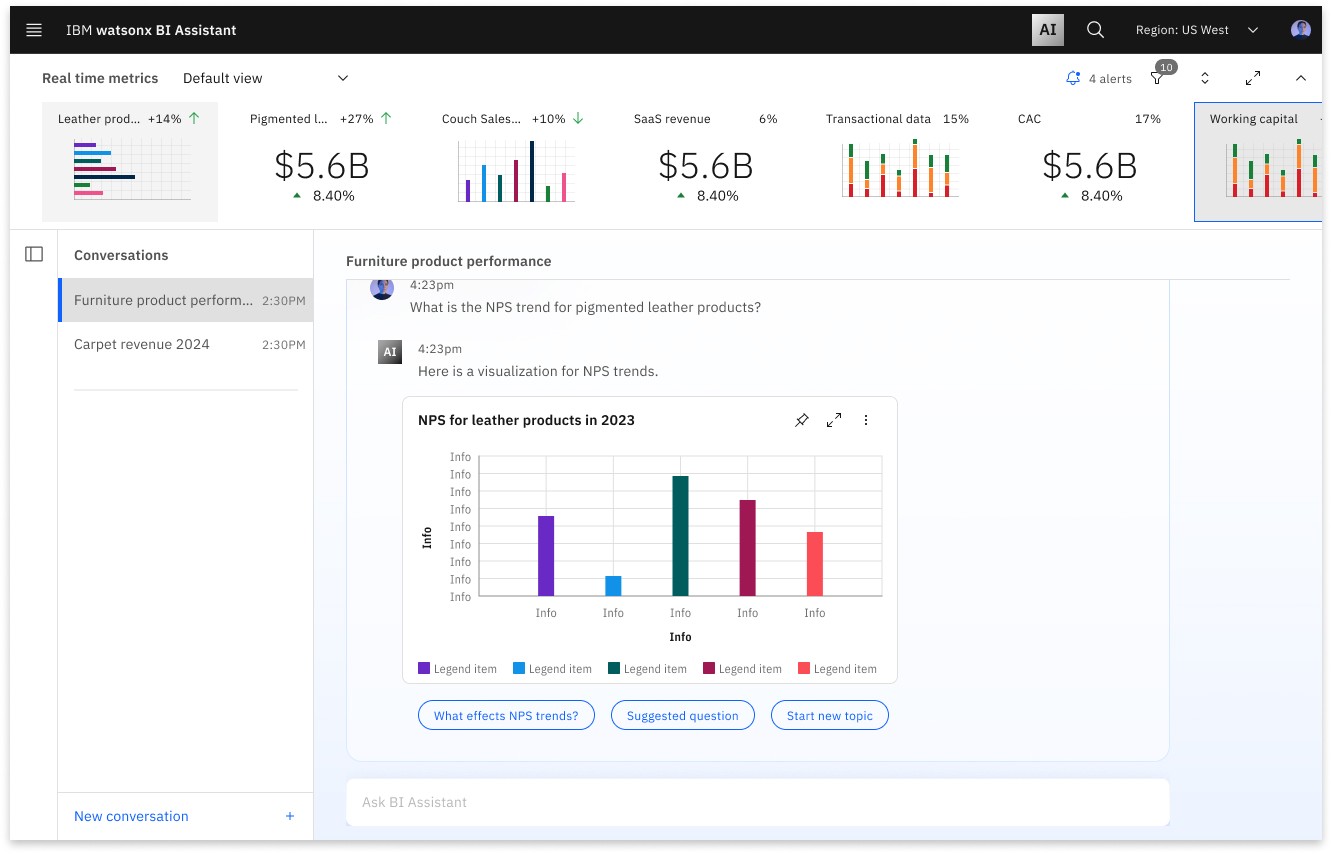
Multi-Dataset Carousel — Users can seamlessly access all their data through a unified interface
User research with sponsor users and existing clients made one thing clear: access to all relevant financial data needed to be fast, simple, and seamless. I led the team in designing an interface that allowed users to switch between multiple data sources instantly, without navigating complex workflows or performing manual calculations.
This drastically reduced the time required to gather insights for reporting. Instead of digging through disparate datasets, users could get accurate answers in moments, improving efficiency, reducing errors, and strengthening decision-making across the organization.
Outcome 03:
Data and Asset Disambiguation — enable users to train, refine and improve response generation
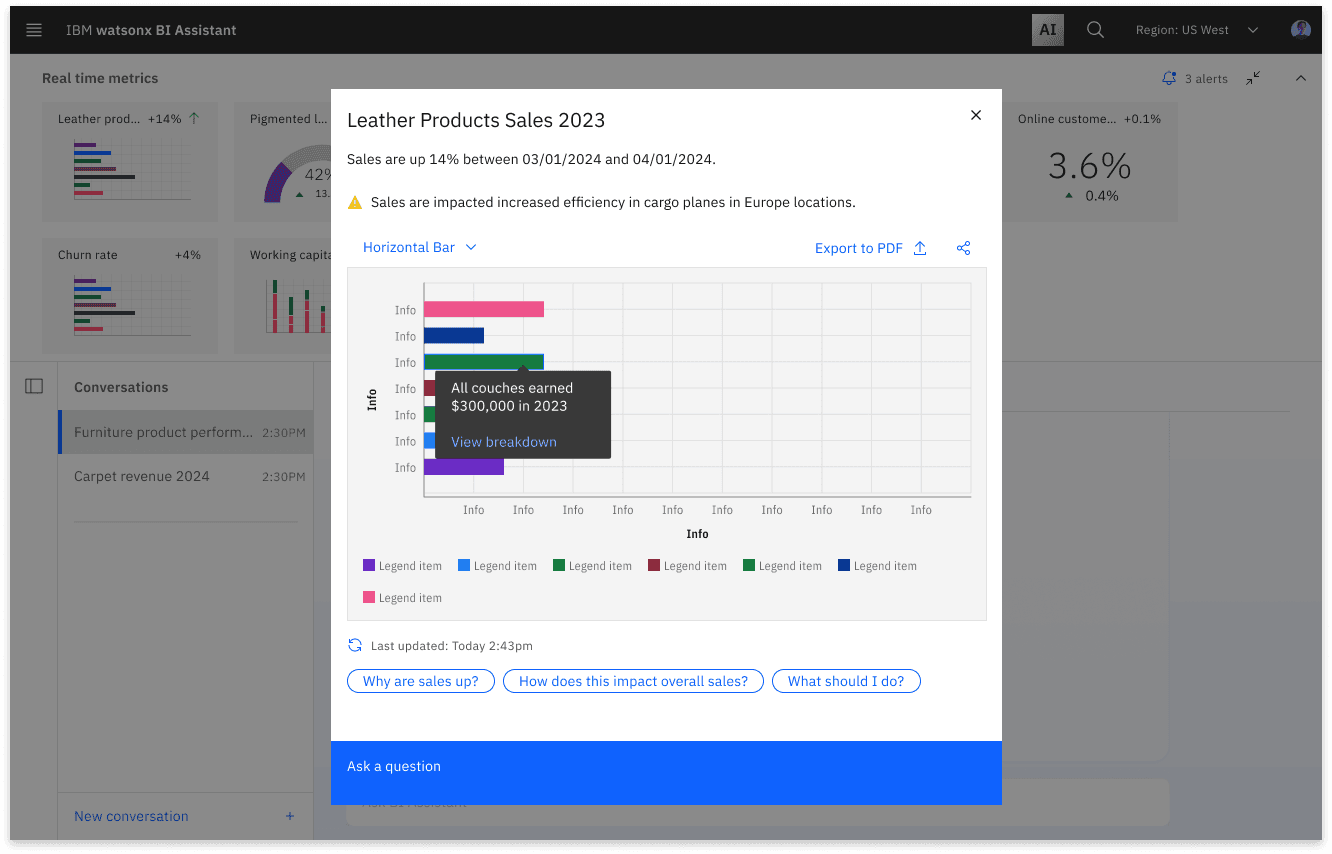
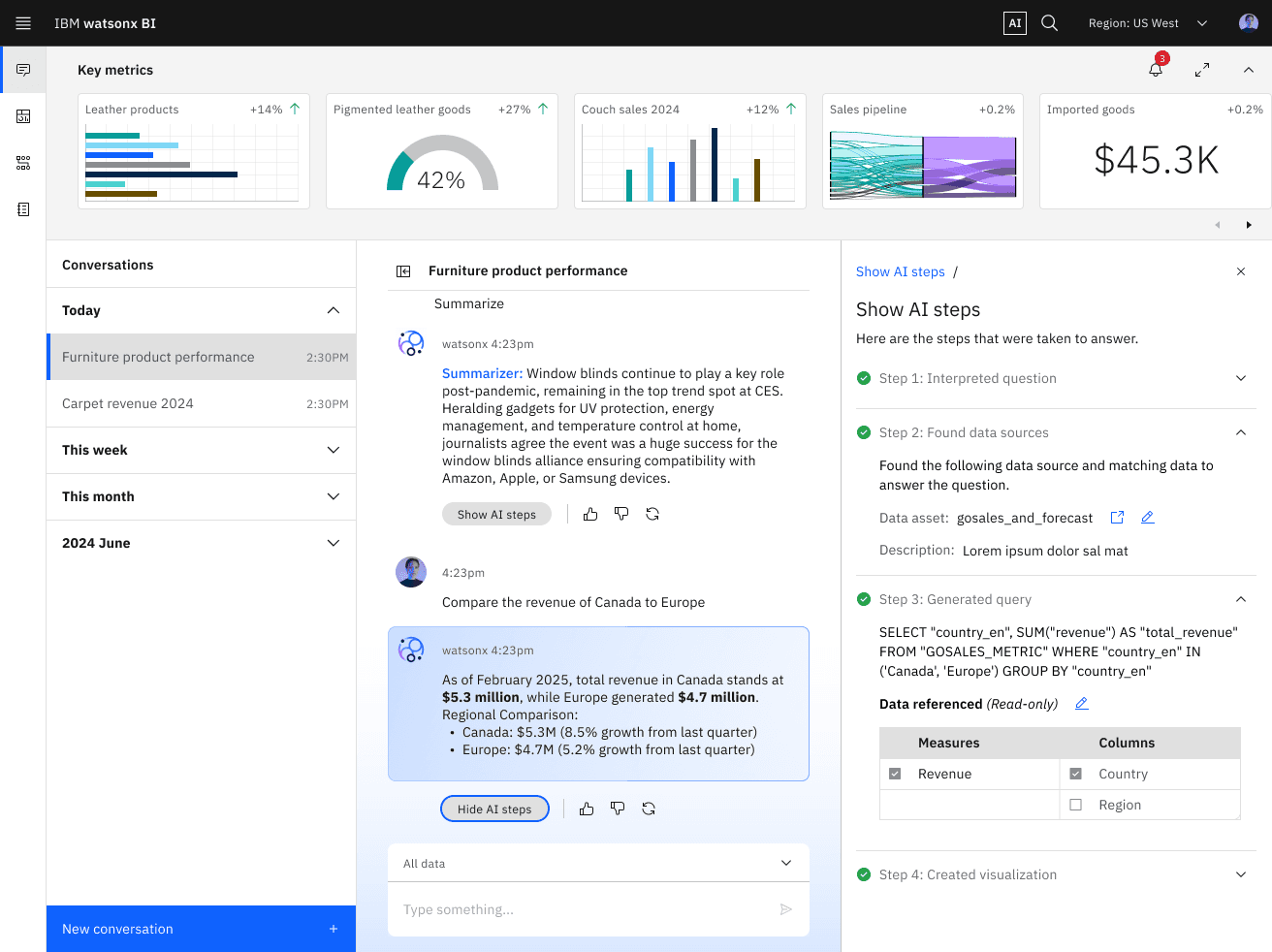
A core principle of the experience was giving users full visibility and control: not only the ability to explore their data, but also the power to train, refine, and improve the AI’s response generation over time. To support this, I guided the design team in unpacking and exposing the steps the model takes to arrive at an answer. This approach helped users refine outputs for greater accuracy while also demystifying the AI’s decision-making process.
The outcome was an interface that put users in the driver’s seat. They could see how their question was interpreted, adjust which data sources were used, refine the generated queries, and edit the final visualizations. This level of transparency and control not only improved accuracy, it empowers users to build trust in the AI and shape it to their evolving business needs.